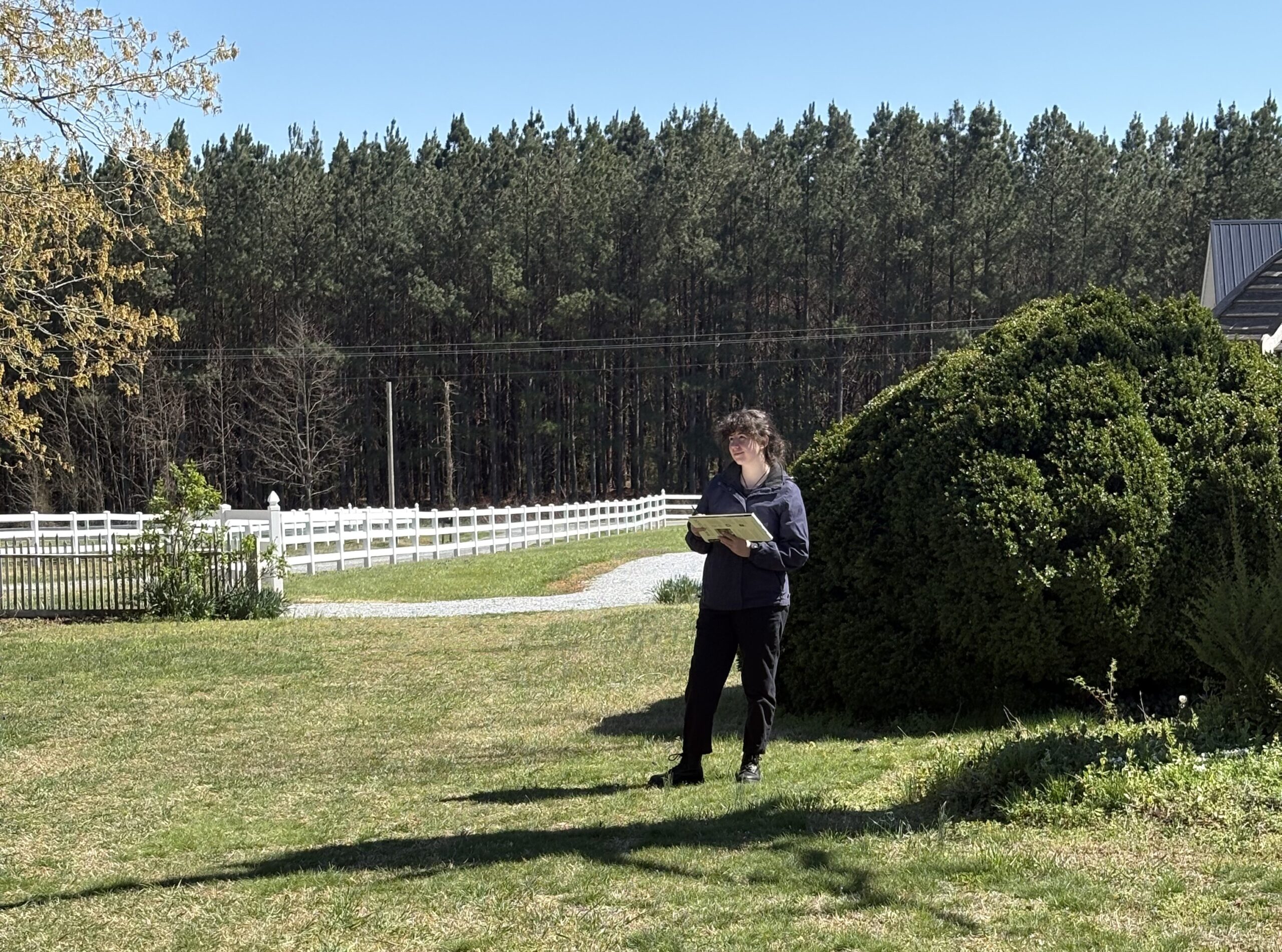
It’s time…it’s the end of an era. This series of blog posts about my new artistic endeavors is wrapping up, and it’s time to scrutinize the artist’s arc that has taken place over this last semester.
Firstly, one unexpected benefit is that it feels overall easier to write. These blog posts started out feeling a bit academic in nature, but learning to just “stream of consciousness” it out every once in a while is beneficial. I hope whoever has been reading these can glean some entertainment from my thoughts, however scattered they may be. I do love to write, but sharing it is a different story entirely, but now there’s something a bit comforting about sending your ideas and opinions out into the void. I have no idea who has been looking at these, except for my professor, but now they occupy some mysterious place on the web instead of just marinating in my head forever, and that’s honestly a bit refreshing. Plus, it gives me a chance to use a lot of obnoxious big words and run-on sentences. It’s fun. It’s like breaking out the fine china, but with vocabulary.
I suppose it’s time to speak about the actual art aspect of this semester, in which I experienced four(!) new art forms that I had heard of but not really attempted. Beginning with charcoal portraiture was a lot of work, and this section was honestly the most difficult overall.
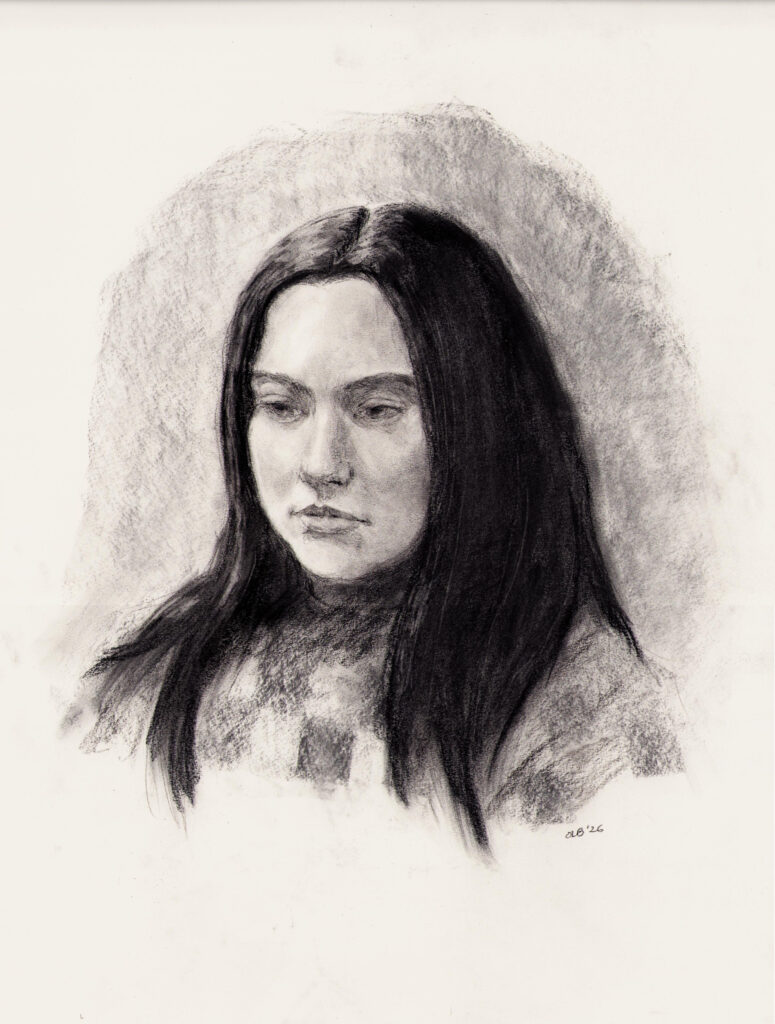
As someone who has not attempted realistic portraiture often, this felt like a plunge into the unknown with tools I didn’t know how to use. The charcoal pencils were surprisingly messy and even a bit difficult to control. The slightest attempt to adjust something could smudge and mar everything around it. In addition, learning facial proportions is no joke, and rendering them is even more difficult. However, learning to achieve different values and convey forms with lighting is a beneficial skill which, while derived from charcoal in this case, will help me in any other art form I attempt. The best thing about this was trying to capture a bit of the person’s soul in the portrait, not in a “The Picture of Dorian Gray” way, but as a form of appreciation for the unique beauty and personality each person has.
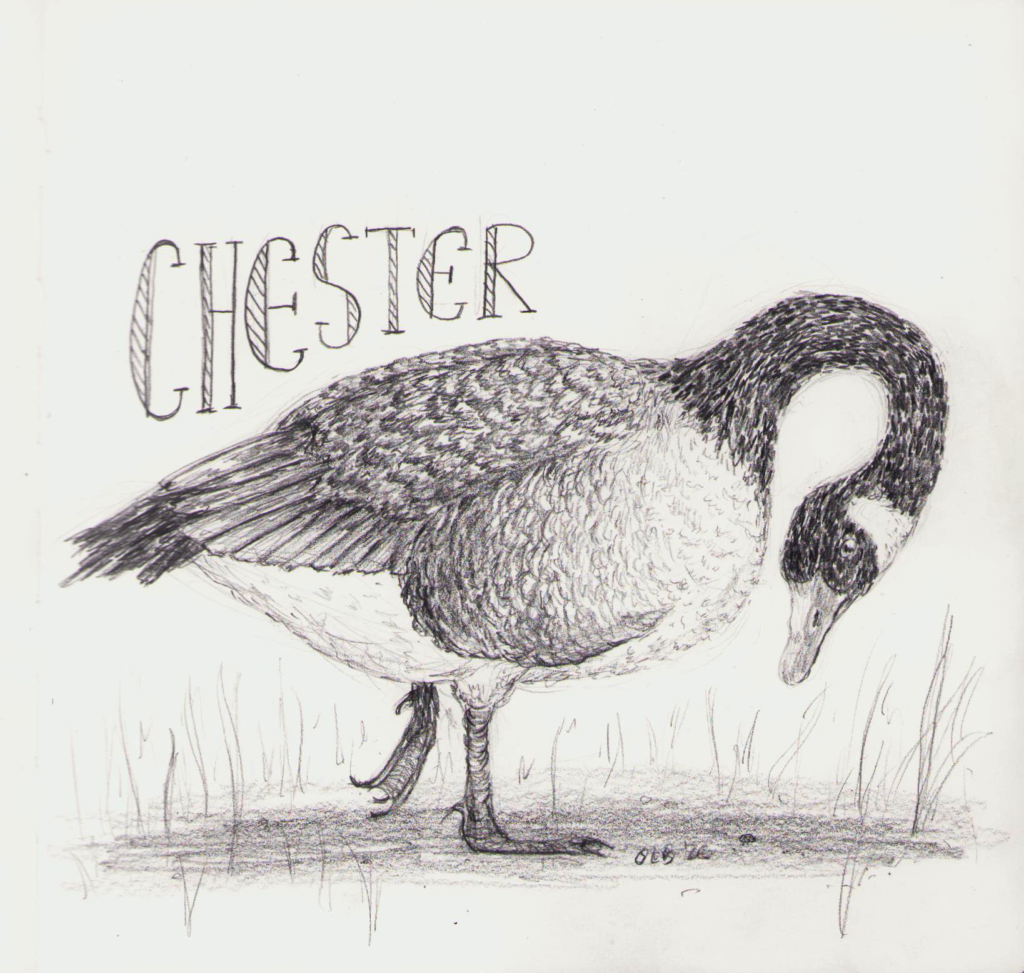
The animal/gesture drawing portion of this class was a welcome break, and led to many wonderful opportunities for me to observe unique animals for the sake of art. I started to truly believe I had “made it” as an artist when I found myself in the zoo on a weekday, drawing macaws from the amazon and koi from Japan, while a giant African tortoise scooted around my workspace with surprising speed. Not to mention the adorable highland cows and chubby piglets I got to pet when I visited a farm. More than any other module, this one taught me about speed and relaxation, capturing the animal’s energy without worrying about perfection.
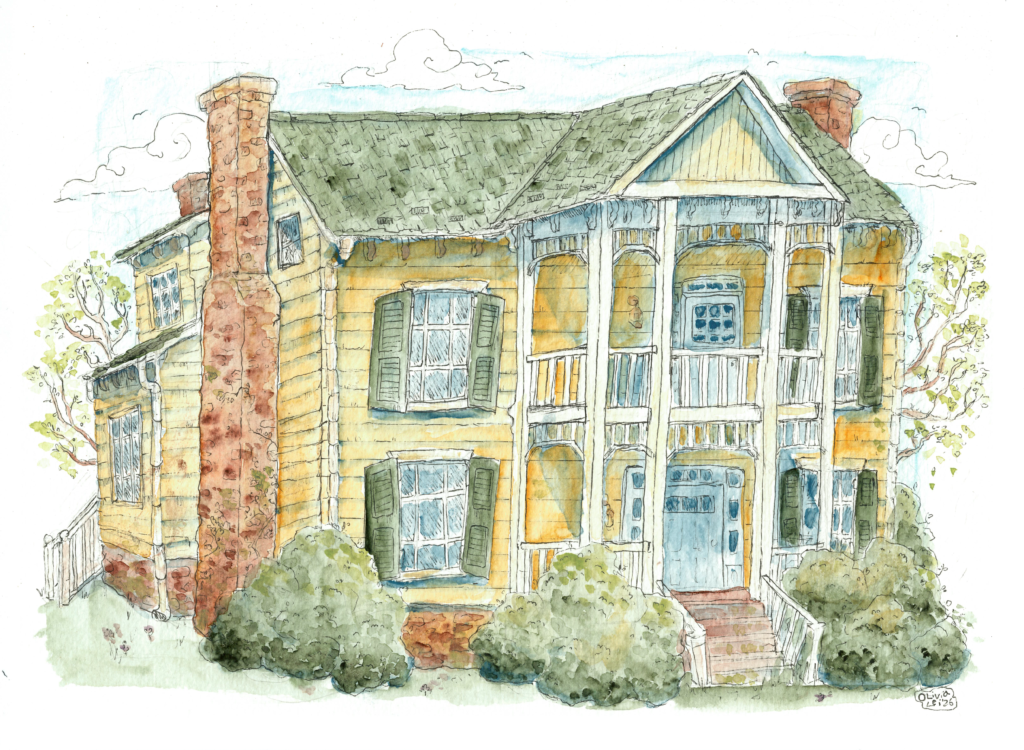
The urban sketching portion was fun…for the first half. I loved the freedom to return to a comfortable medium (ink and watercolor.) I also enjoyed the fact that I didn’t have to worry too much about precision and could instead emphasize the weathered and wonky aspects of the buildings I drew. When it came time to include people, the difficulty greatly increased, especially in the area of perspective. However, it was fun trying to record a snapshot of time, where strangers were just living their daily lives.
As for plein air, I’ve been talking about that a lot recently, so I’ll stick to my final thoughts on the subject. Mainly, oil paint is not as bad as I thought it would be. It’s very forgivable, and is likely the best art form to practice color, composition, and form. However, setting up all of the supplies is a bit of a pain, and it’s kind of weird when strangers hover around to watch you. It is good to get outside, though, and the fact that you only have a few hours to get something on the canvas takes away the pressure and encourages you to just dive right in. There is so much beauty to be brought out everywhere in nature, and plein air painting gives you the freedom to convey that. Also, don’t create a sludge monster with year’s worth of old paint and turpentine.
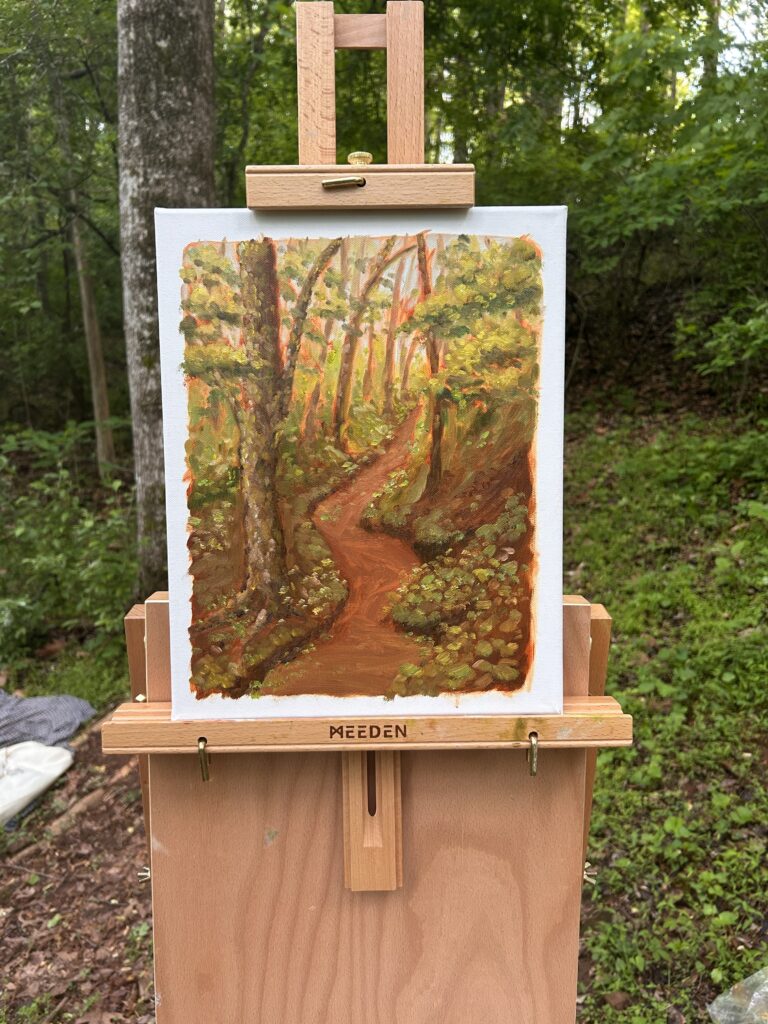
Throughout this course, I have learned that diving into a new project without the expectation of perfection actually helps you grow more, and possibly even faster. It helps you stay present and grow your observational skills, and helps you have realistic expectations of yourself. The harmony between passion and technique are what create a successful piece of art, and this class has given me steps to climb on the way to achieving this, as well as a community striving for the same thing. Stay spirited. Crack a joke or two, and don’t take life so seriously, even when it’s frustrating. You’ll find other artists who see the world like you do, and become all the better for it.
Leave a Reply