Do places have a kind of soul? A personality? Some mysterious combination of details that brings them to life, like a book character or a portrait? I have always argued in favor of yes, and this new endeavor of urban sketching will hopefully provide a hill of evidence tall enough to die on.
Concept artists for things like video games and animated movies strive to create something called “environmental storytelling” in the settings they create. This means they strategically create and emphasize the details of a place in a way that furthers the surrounding story. For example, there might be spooky handprints on the wall in a zombie movie, or there might be strange architecture on a depiction of an alien planet, signaling the heroes are not alone. There are even examples of this in real life, if you know where to look. Once I saw an image of a suburban street with a large sign warning people to watch out for a family of low-flying owls living nearby. Directly beneath it was a smaller, handmade sign that read: “Lost Chihuahua.” I can even see the principle of environmental storytelling in my own room. My door is painted white, but all around the doorknob are smudges of paint and ink from years of me going to and fro mid-project.
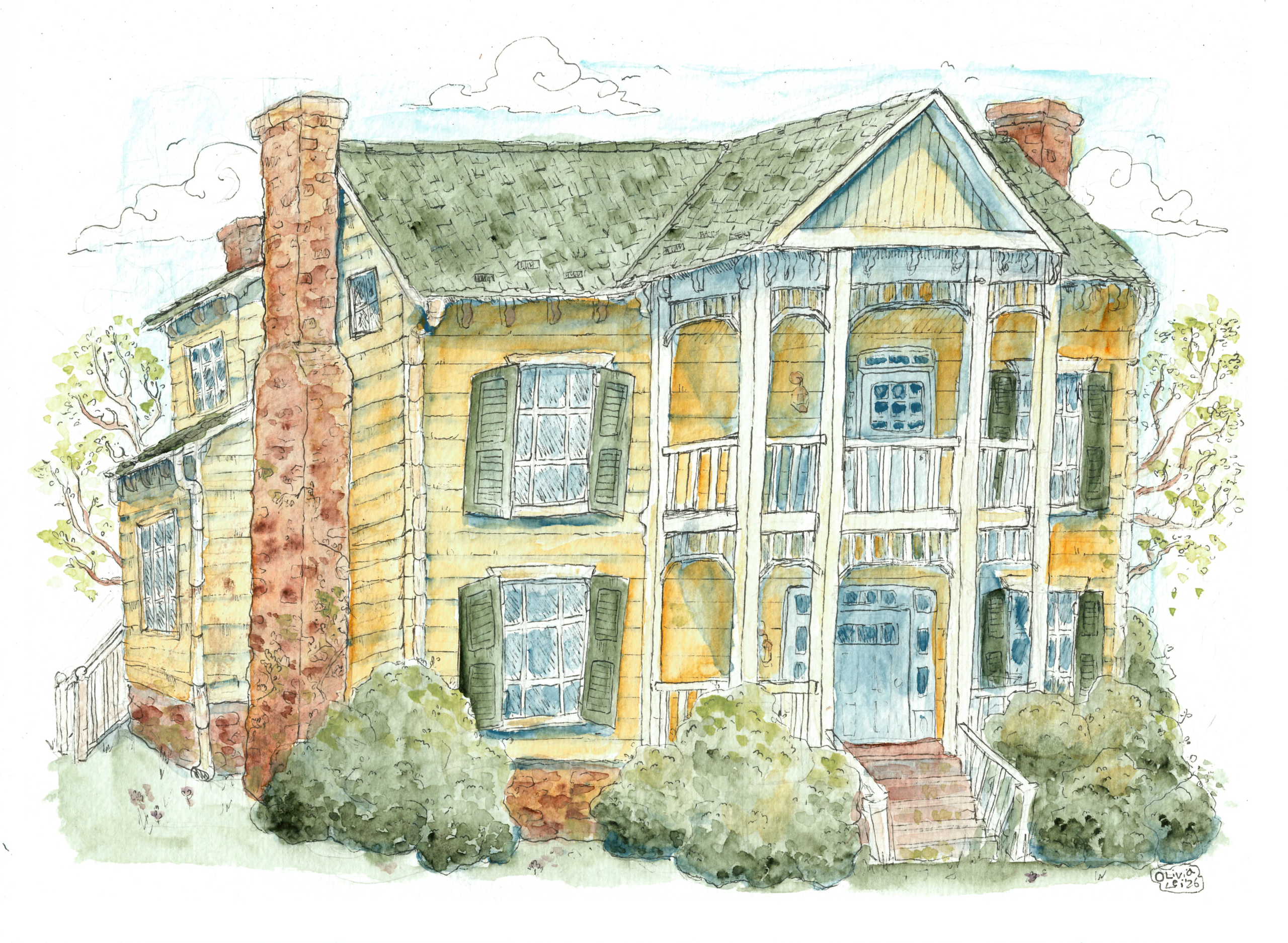
At the beginning of this project, it was easy to become discouraged that I couldn’t find any super “unique” architecture, especially since I was away for the weekend, when I had the most time to draw. But, I realized no matter what I drew, there would be a way to bring out the “soul” of a building. I could attempt to take an ordinary place and bring out the most whimsical aspects of it, stretching the details in order to capture the spirit of a place instead of honing in on perfection. This was where I could implement some environmental storytelling, as the dilapidated aspects and imperfections help convey the mood and story of a piece.
It is worth noting that my first attempt at urban sketching consisted of one of my university buildings. However, as I was sitting on a bench outside to draw it, it was freezing, windy, and very noisy due to construction and other similar activity. That particular attempt was thus abandoned, and I learned the importance of the quality of your surroundings when setting out on a sketching endeavor.
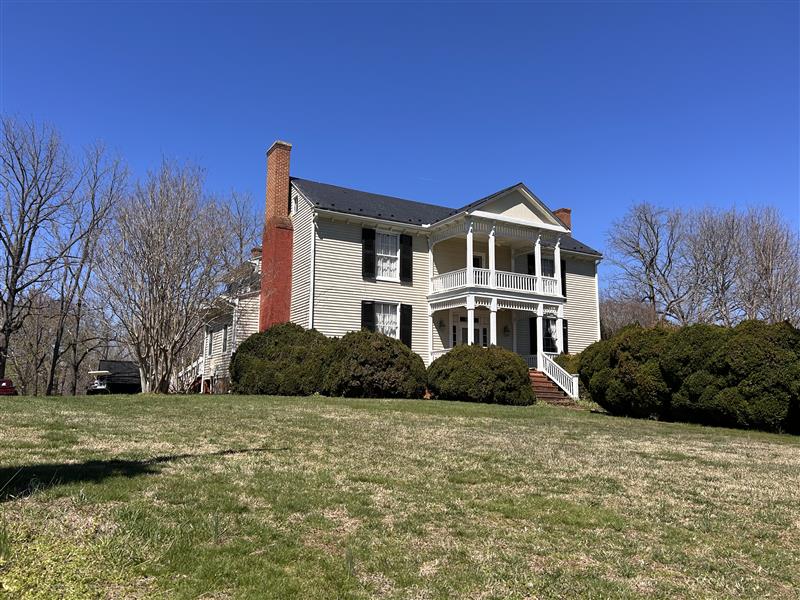
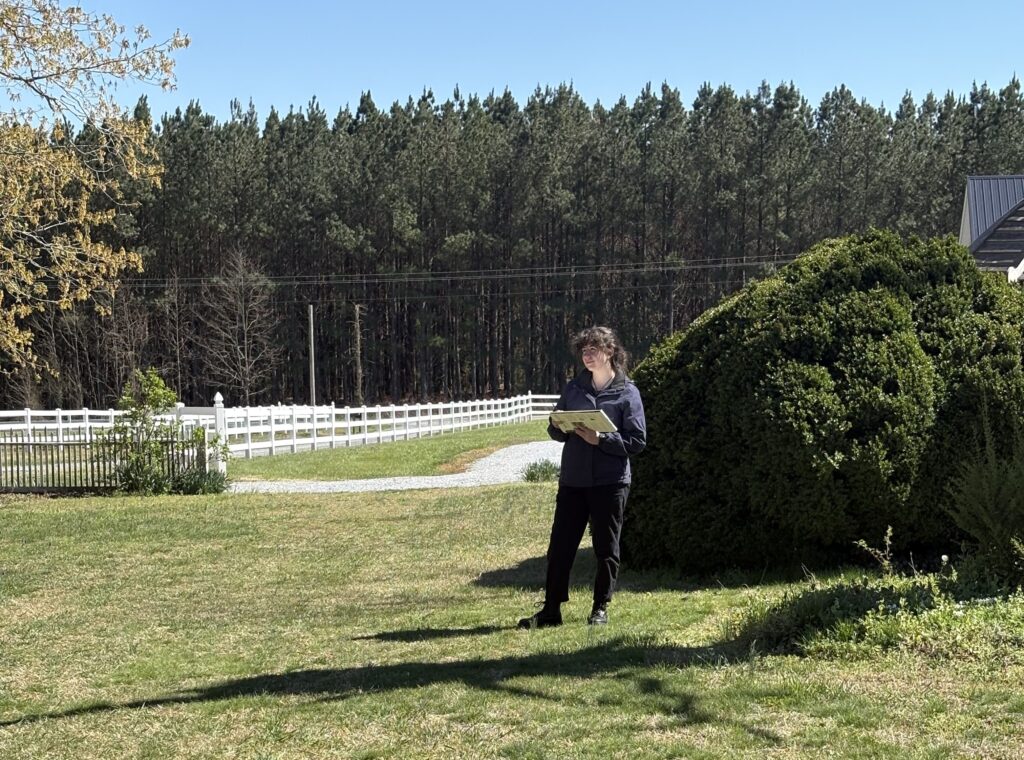
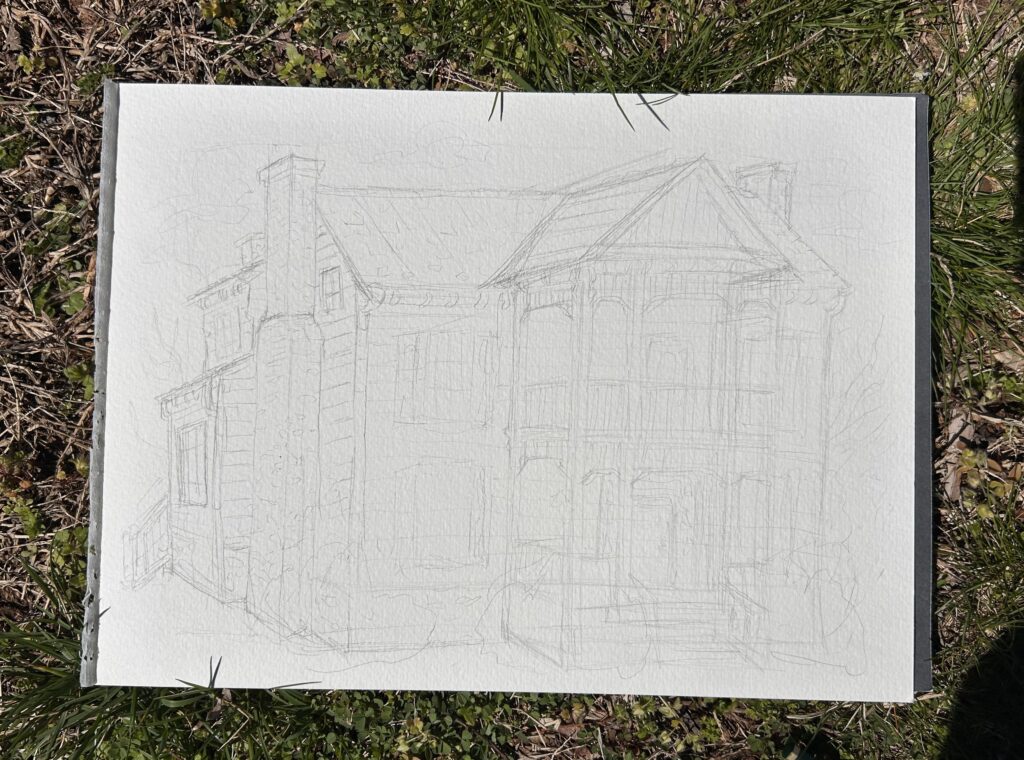
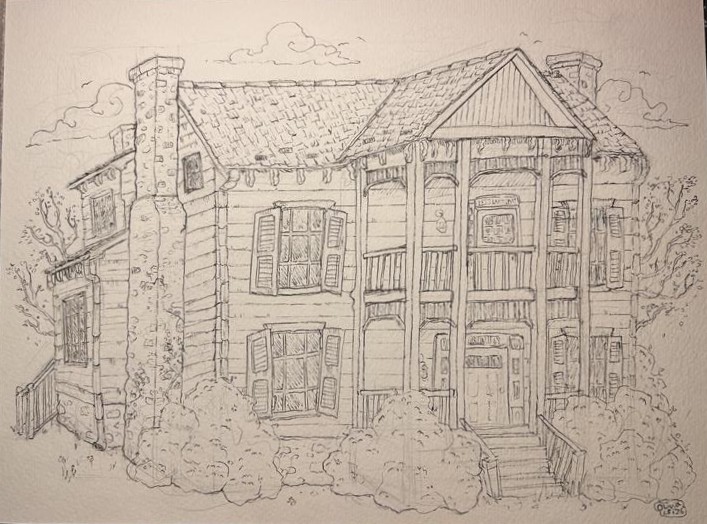
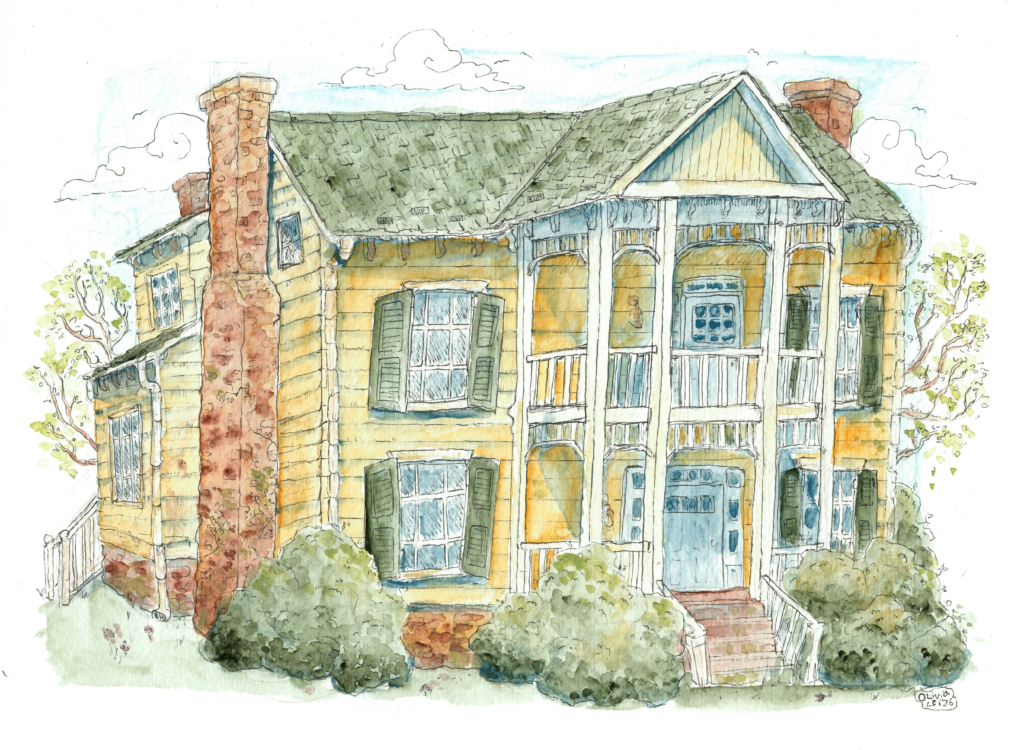
My next attempt was to draw my friend’s (180-ish year old?) farmhouse. It is wonderful building covered in charming details, such as multiple chimneys and a stacked porch and balcony. The red of the bricks contrasted nicely with the surrounding dark green tones of the bushes, roof, and shutters. The house is painted a yellowish cream color with white trim, but since the sun was shining on it and giving it a warm cast, I went ahead and made the main siding full yellow. This provided more contrast with the balcony trim and made it look overall sunnier, even if it isn’t the exact color of the real thing. This, along with my emphasis of the age of the building, seen in the exaggeration of the bricks, shingles, and overall angles, gives the impression of a peaceful, weathered place, a sanctuary on a warm spring day. I also chose to de-emphasize the large boxwoods around the base of the house in order to include more details and better show the perspective. During this process, I was sitting on the ground in the middle of a flock of chickens, and I wish I had included one or two.
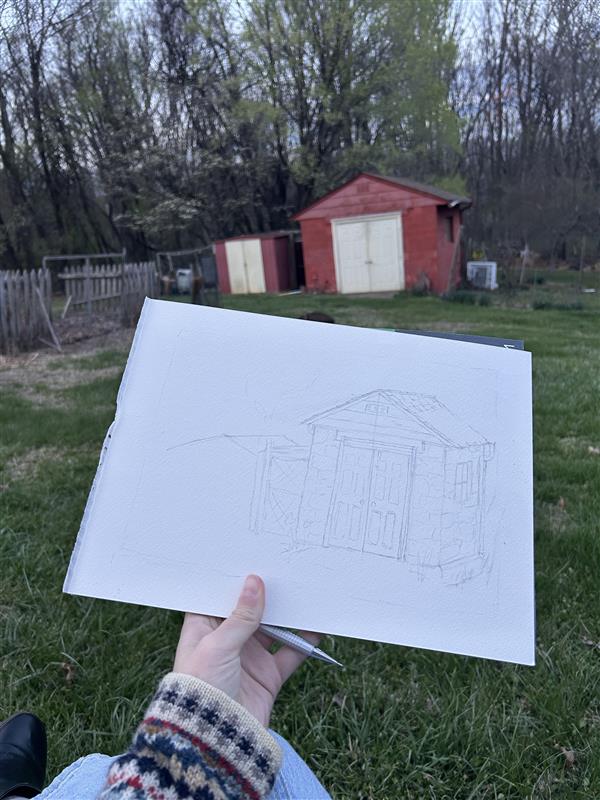
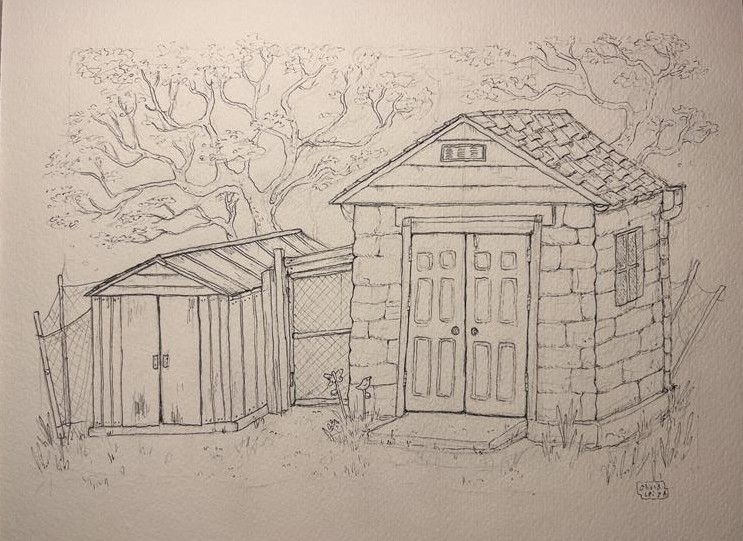
The second building I struggled to find, since time was running out after I returned home. In my backyard, I have two sheds connected by a simple wooden door that leads to a chicken coop. Again, there was a great opportunity to include some chickens here, but it just slipped my mind. Anyway, they are quite old and have survived falling trees, invasive vines, and constant sun exposure, which has given them a lot of character, and their red color contrasted well with the green background. I wanted to show the age and weathering present on their surfaces, so I made sure to include the crumbling stones and rust on the metal door, along with the moss and lichen that likes to grow on both. Painting this was really fun because of the vastly different textures these buildings have. I got to use my brush to splatter the surface, and in the future I would like to include this technique even more. As in the first building, I used dark blue watercolor for the shadow and then painted directly overtop of it, a technique I learned from urban sketch artist Francisco Fonesca. I admire the character of his buildings immensely, and want to practice pushing the shapes of my sketches in a dramatized way like he does.
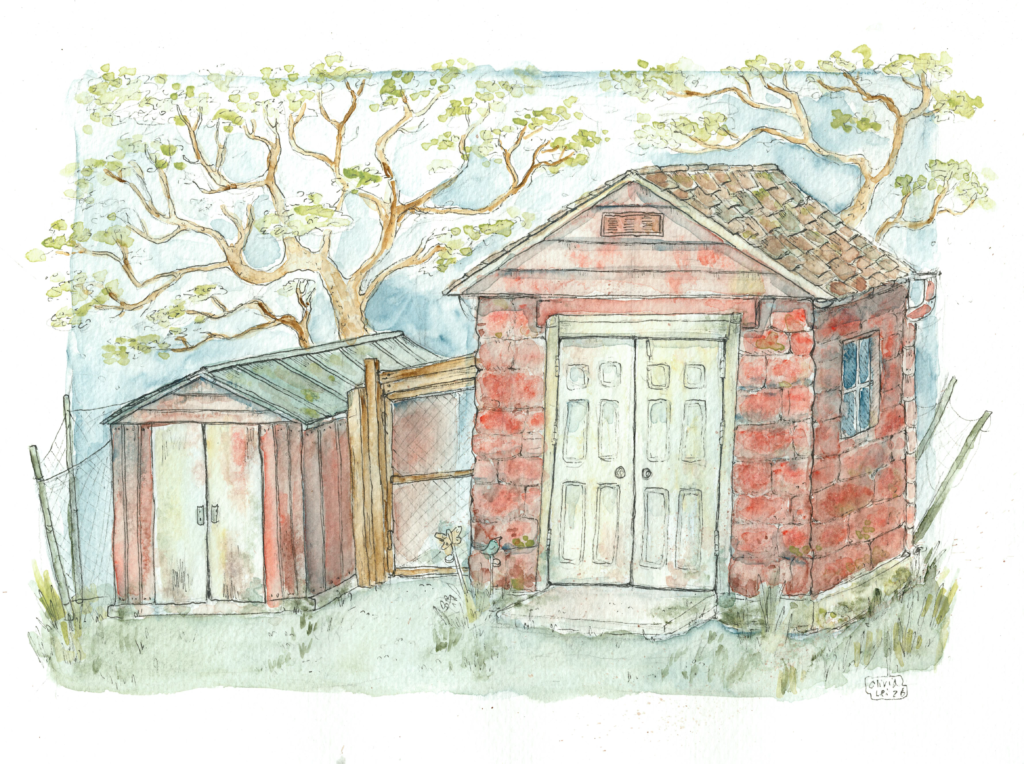
Overall, I greatly enjoyed this process. It was fun to work with ink again, since that was a favorite method of mine growing up, along with watercolor. Painting these buildings helped me see something that I would normally consider ordinary as a vessel of possibility, filled with history and a promise of interesting stories to come.
Leave a Reply