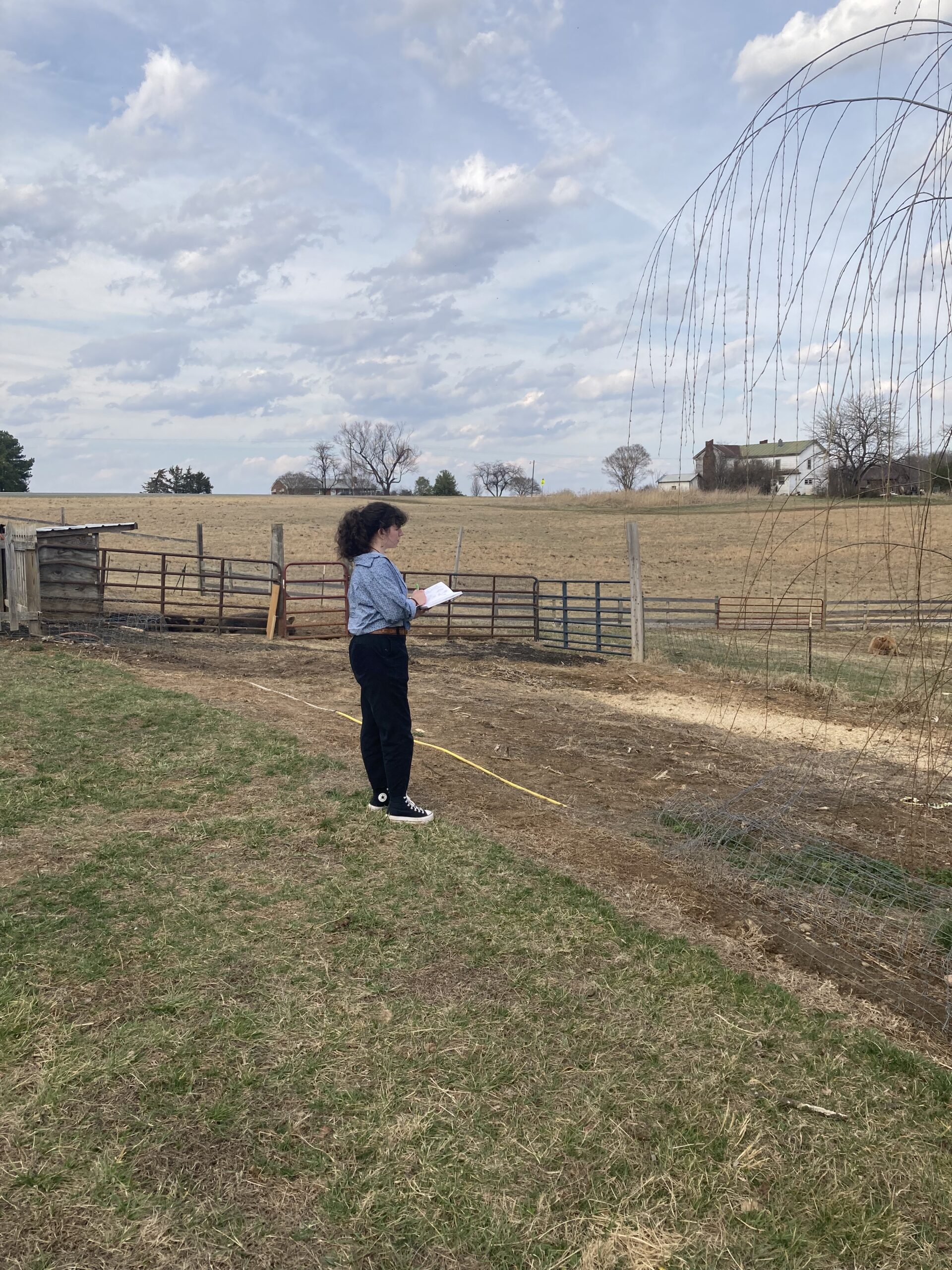
Ever since I was around thirteen years old, I wanted to dedicate my time to improving my art and storytelling abilities. These first few years of my journey were filled with headlong leaps of faith into the unknown, drawing whatever interested me and learning from books at the library. It was the usual middle school subject matter: anime, dragons, superheroes, etc. These subjects were fascinating to me, and the ability to use my imagination and invent new characters kept me motivated. I used every resource that was available, saving whatever money I had for new supplies including brush pens, sketchbooks, watercolor, and the occasional Copic marker. My sketchbooks from this time were prolific, and I filled dozens with new experiments, practice, and unrefined creativity.
However, as I got older and decided I wanted to pursue art as a career, I felt the pressure of never having official lessons or formal training. I began to be much harder on myself as a replacement and began accepting only the art that showed significant improvement or technical skill as “valid.” Every other sketch I treated as more of a hobby, even though I did still enjoy it. The percentage of artwork that I shared grew smaller and smaller, and to be totally honest, my creativity lessened dramatically.
By the time I was in college, my art skills had grown a significant amount. But, as a result of the pressure I placed on myself, the only art I was proud of were fully fleshed-out finished school projects. Being proud of these is all well and good, but it meant outside of school my creativity and ambition decreased, especially in the realm of sketching.
I have spent considerable time bringing back the sense of fun and looseness to my drawing, especially in my more experimental art. It is basically a guarantee that things will go wrong, but a challenge to accept that fact anyway and keep creating. This class has been an essential building block in this learning process.
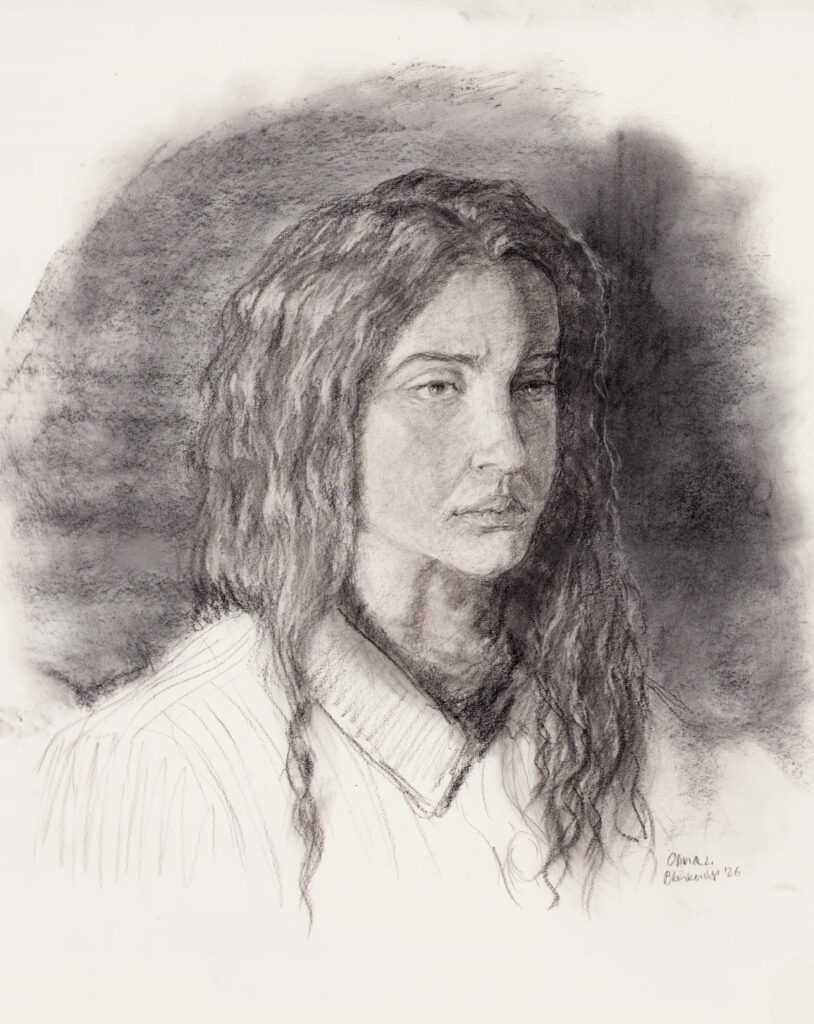
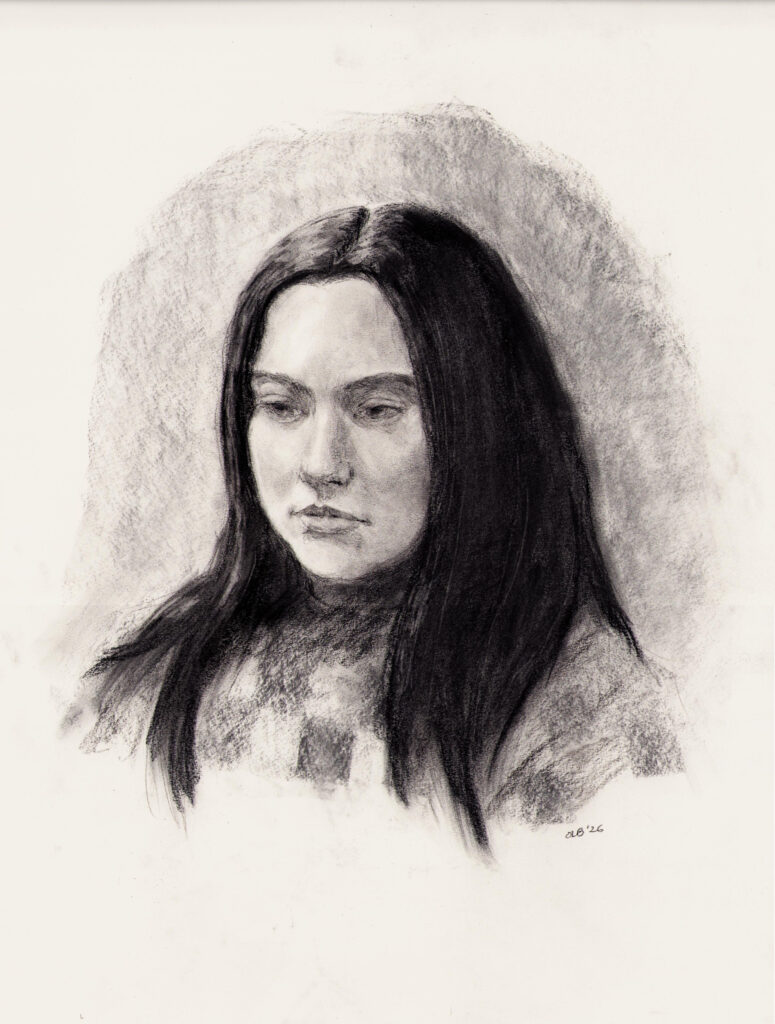
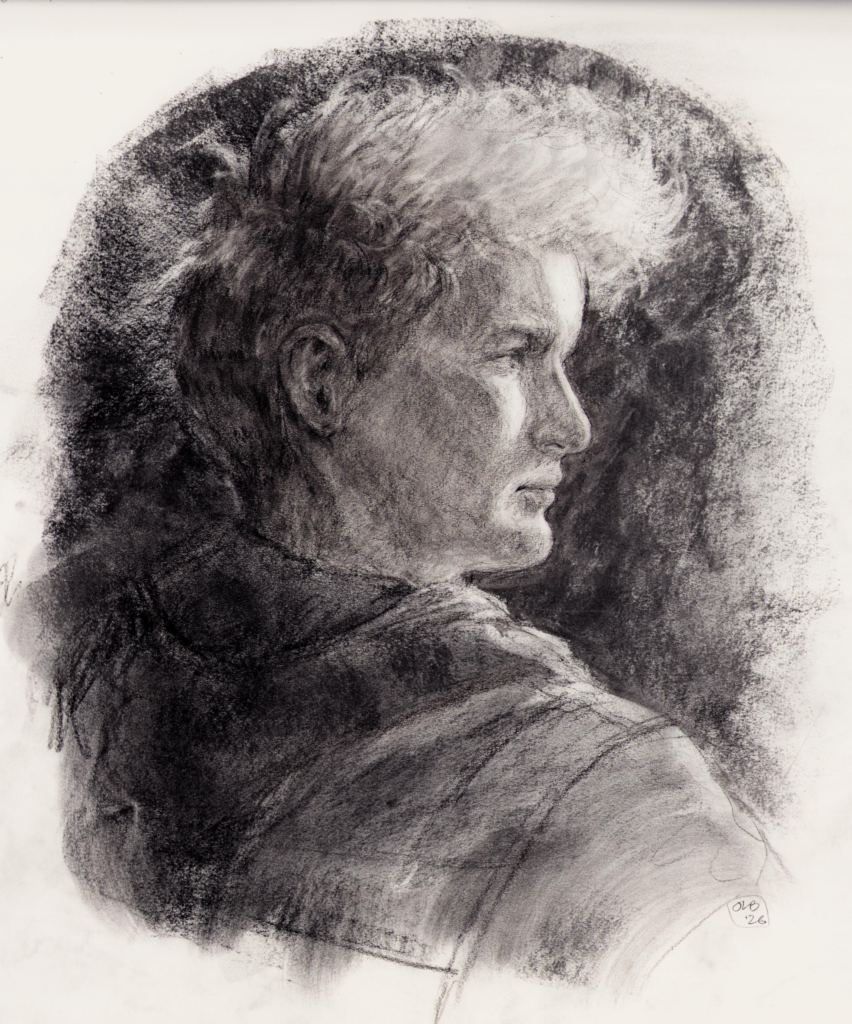
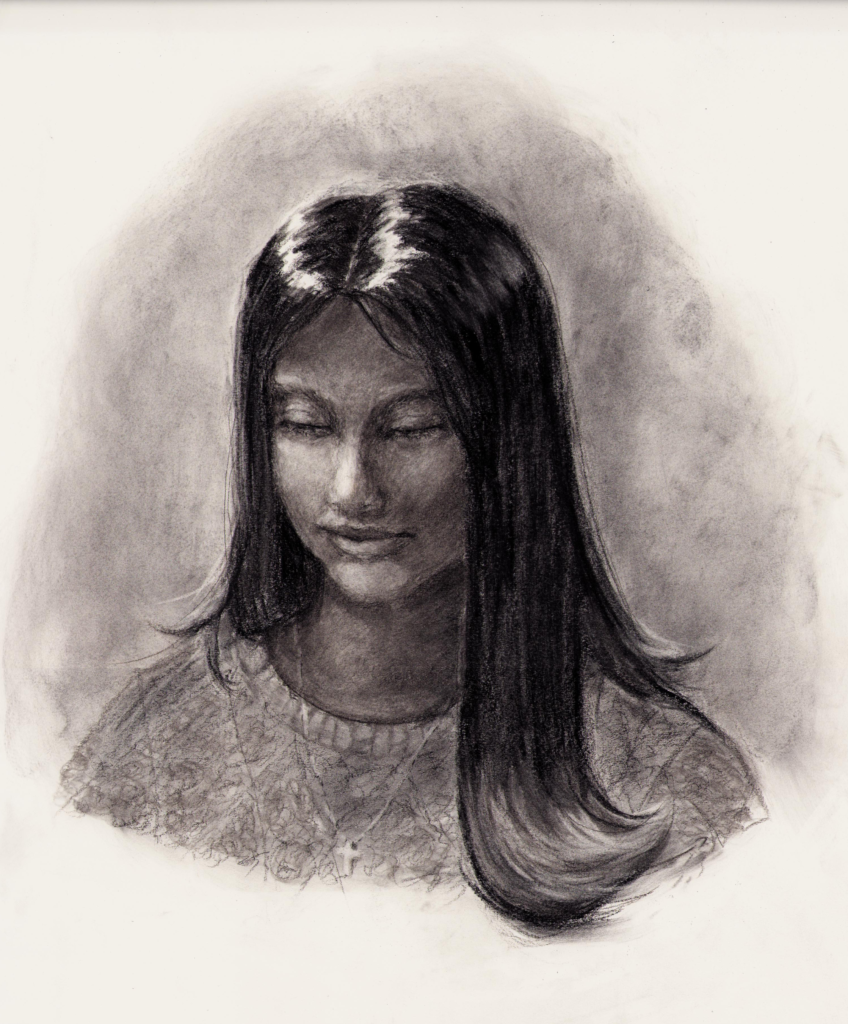
To begin with, learning the entirely new medium of charcoal was often frustrating. It was difficult to control, and I struggled with almost every aspect. However, the time limit gave me a sort of guardrail to do my very best and accept the outcome. My first portrait of my sister had odd shading that did not properly accentuate the plains of her face, but at the same time I began to discover a fun way to render hair with the flat side of the pencil. My second portrait of Elise taught me to draw even faster and block in the darkest shapes first. I also learned how to better portray eyes from my peers. My third portrait of Thomas taught me the importance of measuring proportions earlier on in the process, but I also learned how fun adding dramatic highlights and soft edges would be with a kneaded eraser. My fourth portrait of Anandiya taught me to look for defining characteristics and accentuate the correct ones for a sense of personality. From the feedback I have received, I know I still struggle especially with smooth shading and the quality of my hard vs. soft edges, but I am still motivated to continue in this medium.
Secondly, drawing animals further helped me to understand how essential finding simple shapes is. A singular line of action provides a strong guide for the rest of a drawing, and it becomes a sort of “spine” to build off of. This exercise in particular helped me gain back that sense of freedom in creativity I had when I was younger. The sketches are not “neat” at all, and according to feedback could benefit from even more confident lines, but they aided the growth of my observational skills.
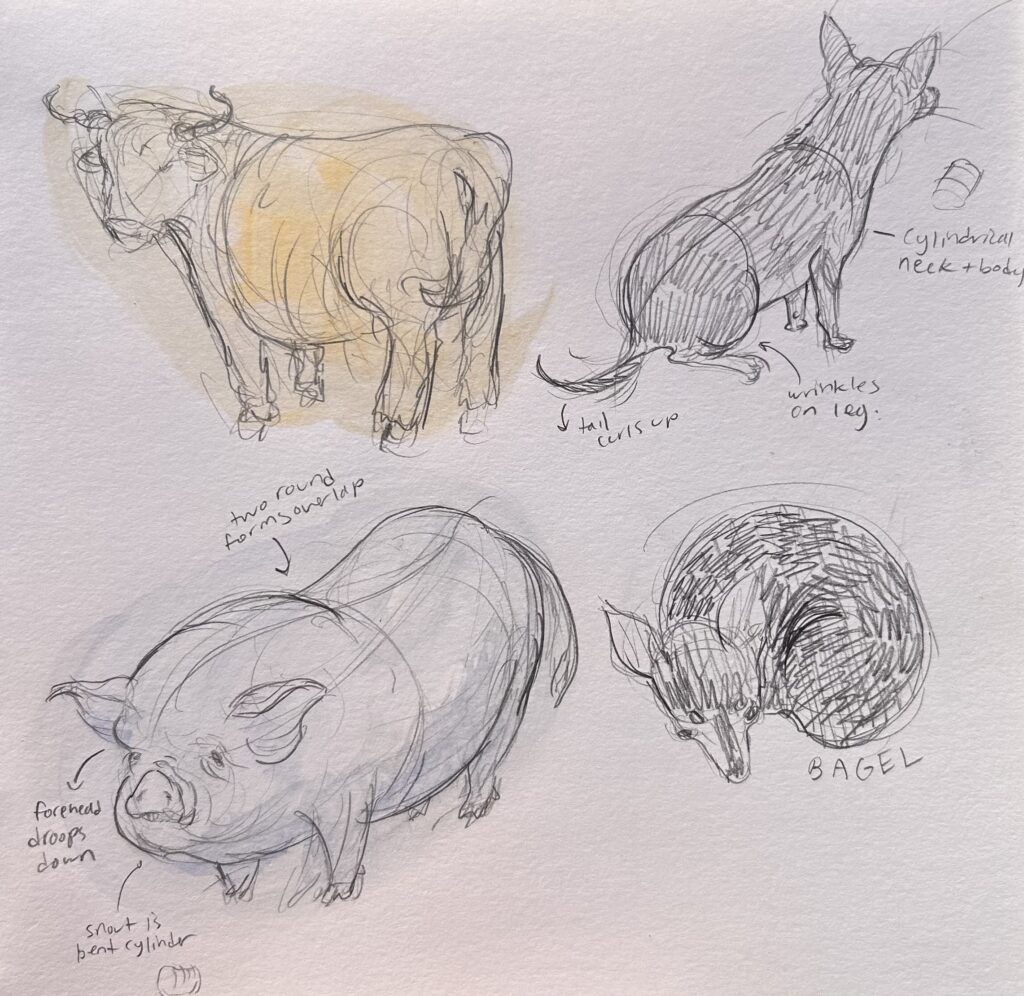
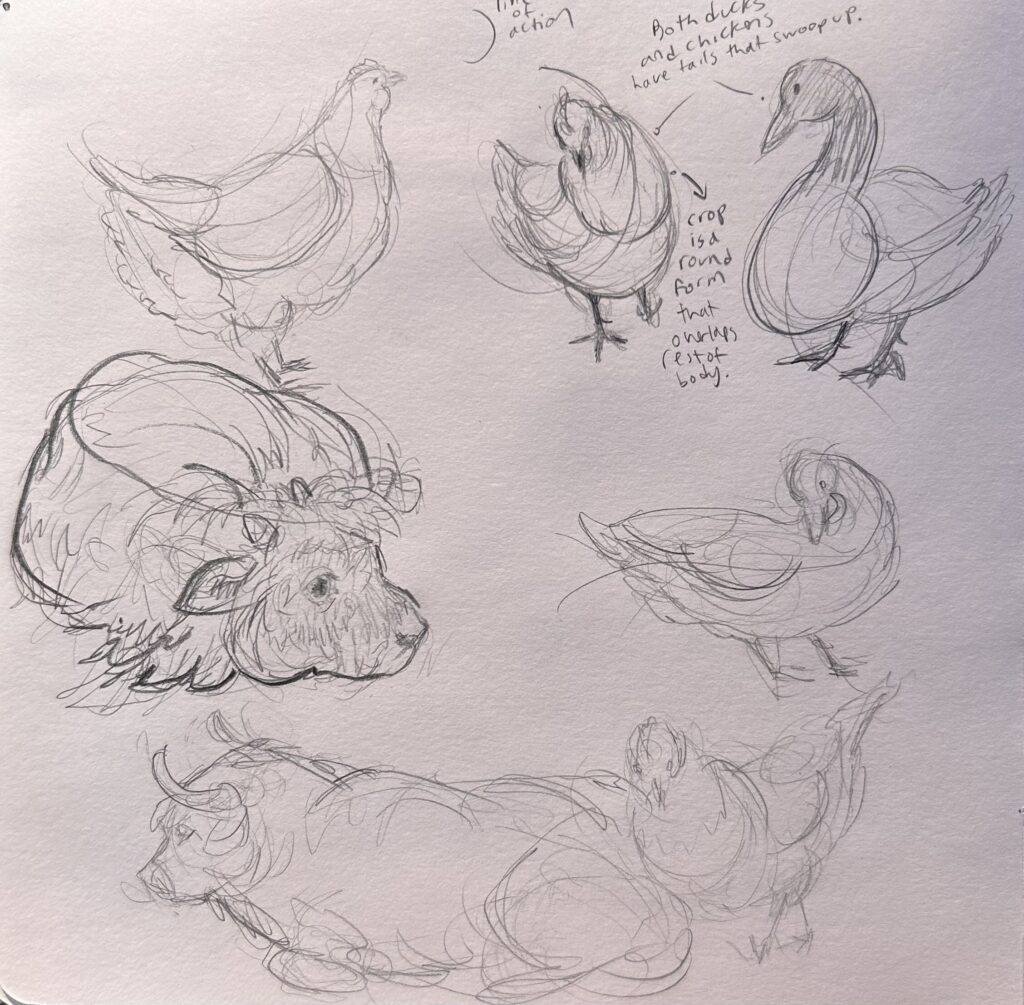
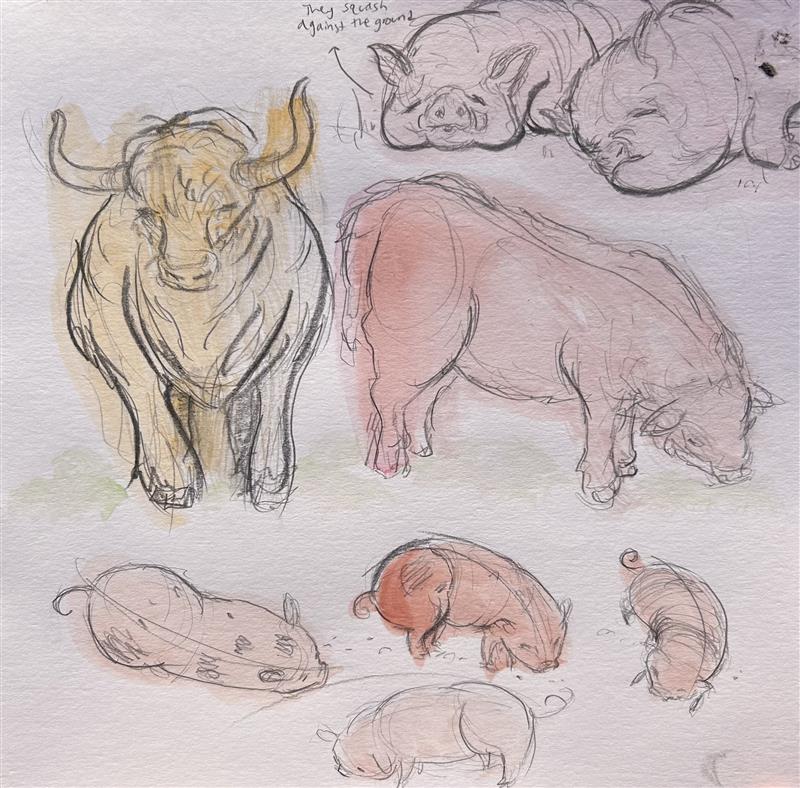
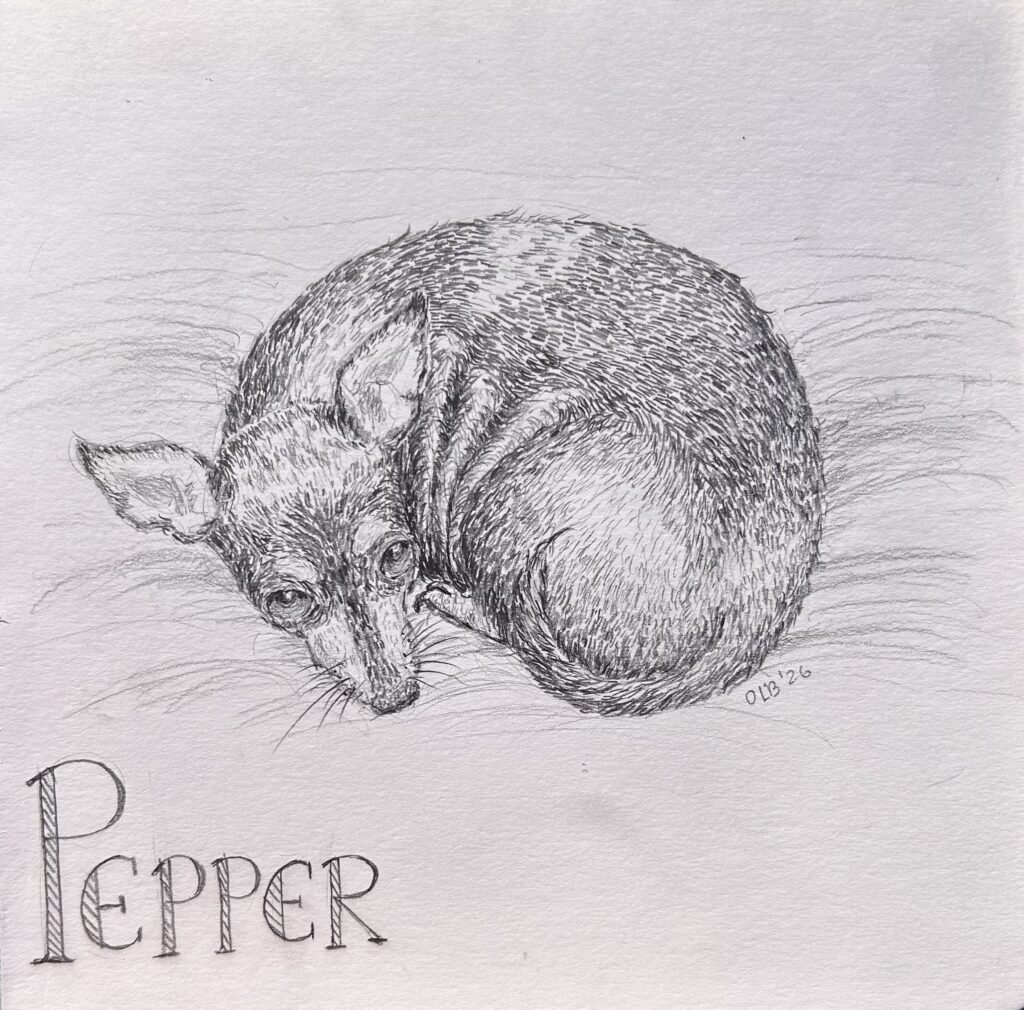
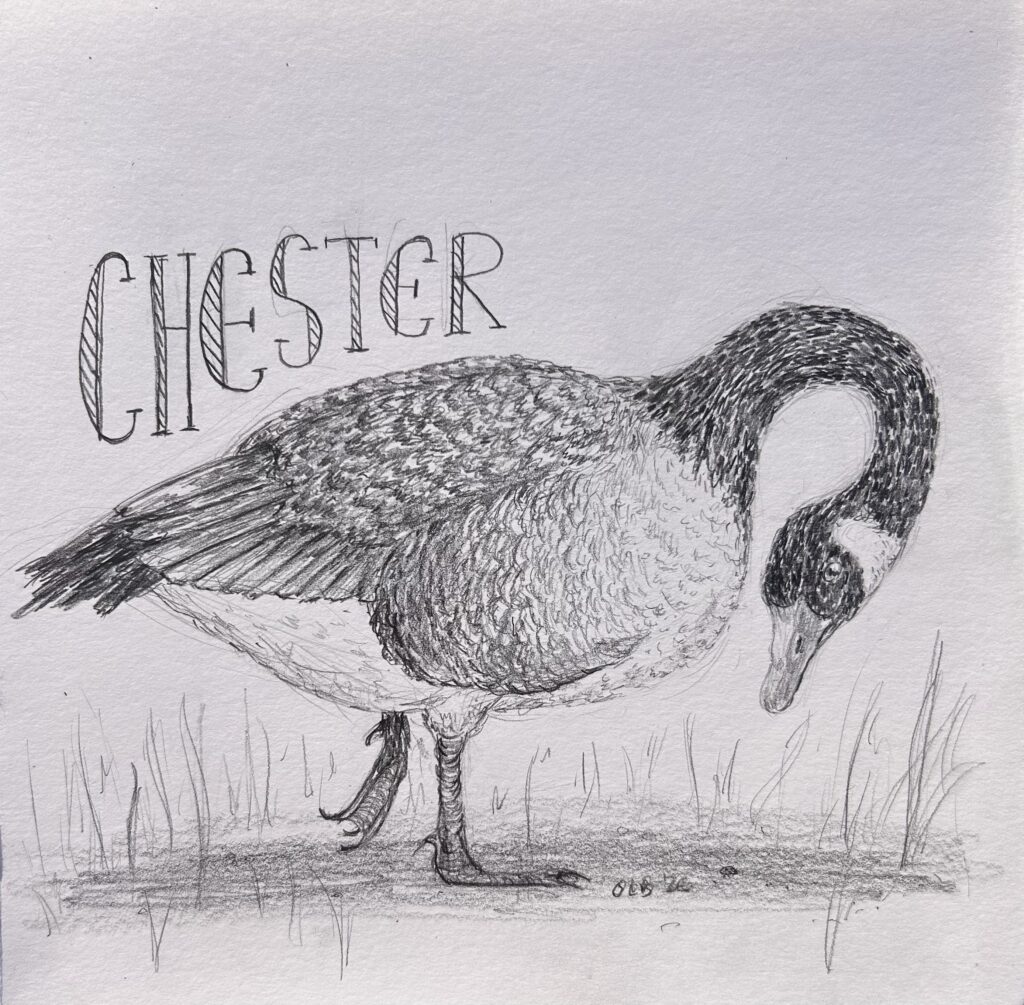
The refined drawings gave me a chance to experiment with texture and lighting while using graphite, which I enjoy for the illustrative qualities it can produce. I also enjoyed pushing the personalities of these portraits, as it helps convey their characters to the viewer.
Overall, I have been both challenged to improve my skills in this class, while, at the same time, letting go of the idea of perfection. I have created so many new things, and have found room for improvement and enjoyment in each. The encouragement we are given to experiment and lighten up has been quite helpful, and produces a sense of balance in my mindset. There should be room for technical growth and fast-paced experimentation.
For the next half of this class, we are focusing on urban sketching and plein air painting, two more entirely new experiences for me. I plan on challenging myself by using both watercolor and oil paints in this process to capture the beauty of the world around me. Countless new frustrations and joys await, and we will see together how it all unfolds.
Leave a Reply