Allow me to tell you a tale of woe. It begins with me dropping a French easel on my foot, and ends with me wasting, likely, ten dollars worth of paint, but having some sense of triumph in spite of it all.
I would like to preface this story by saying that it was my first independent plein air painting, and some frustration was to be expected. However, my patience was truly tested in every way.
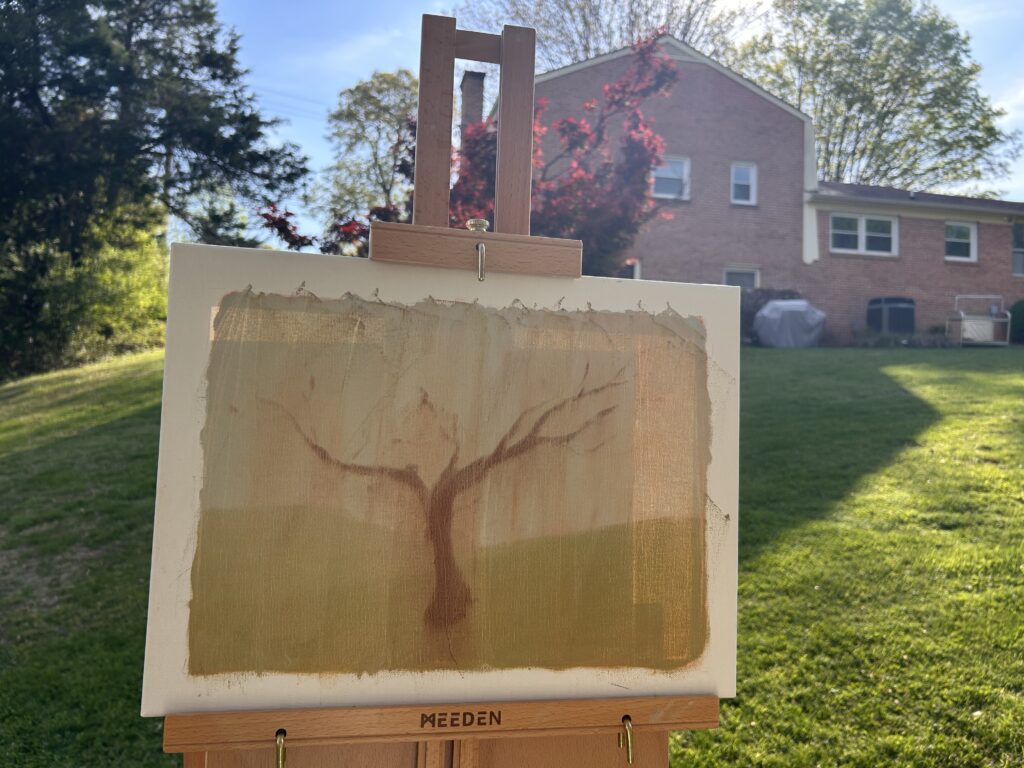
Time to paint outside, after work, while there was still enough light, was scarce. I ended up using my Sunday afternoon for this attempt, which would give me over four hours with enough light. I began by taking my easel to the very back of the yard, where I tried to set up the French easel by myself. In hindsight, I should have looked up a video or something, because the review from the class session wasn’t enough and it collapsed onto my foot while I was trying to make sure the legs were even, and my canvas fell off into the dirt. I actually ended up having to readjust a second time, because the subject I ended up choosing was a Japanese Maple at a different spot in my yard. It is a nice purple-toned red throughout the year, an interesting shape, and I thought it would have great contrast with the green around it. This was true, but depicting that was much more difficult than I expected.
Attempt one consisted of immense frustration, after realizing my house in the background overcomplicated the composition. For reasons unknown to me, I thought the best remedy would be to ignore the house and make up some imaginary background that matched the sky. This did not work at all, and made for a very bland composition with the tree directly in the center of the canvas. Another problem was that, for some reason, the paint kept soaking into the canvas and leaving very streaky marks. The canvas I was using was very old, and I suppose there was a possibility that it was somehow unprimed, unlike new store-bought canvases that already have that step accomplished. I ended up scraping off all of my first attempt.
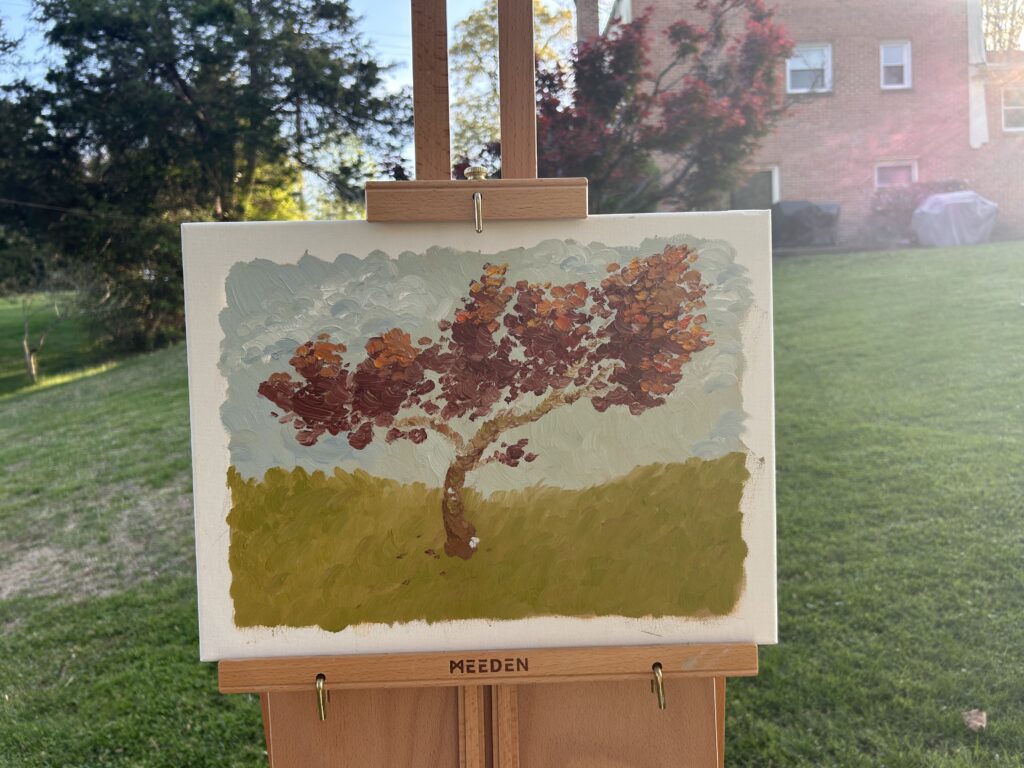
The second attempt was not much better. In order to counteract the absorbency of the canvas, I resorted to painting in a sort of “impasto” manner, with large globs of paint manipulated to portray form. Instead of the desired effect, the colors just mashed together on the canvas and looked like a finger painting done by a toddler. It is a mystery to me how the impressionists pulled off this technique in a sophisticated manner. No matter what I tried, saving this painting was like trying to give CPR to an egg: the more you try to help, the more irreversible damage you do. That might be a terrible analogy, but it’s not as terrible as scraping a metric ton of very expensive oil paint off your canvas for the second time in an already frustrating endeavor. It was getting dark, and the tree was completely in shadow. It was time to just walk away.
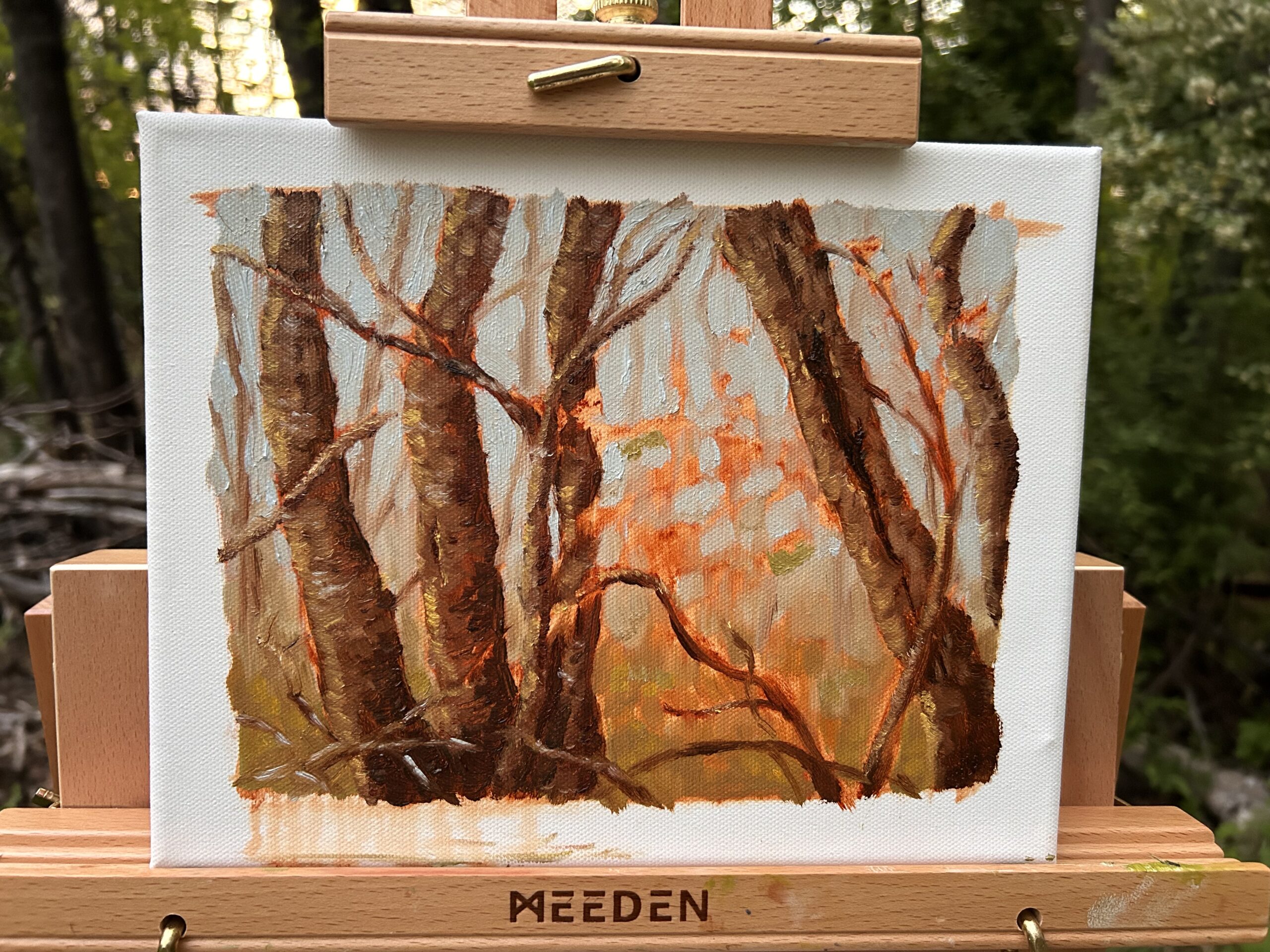
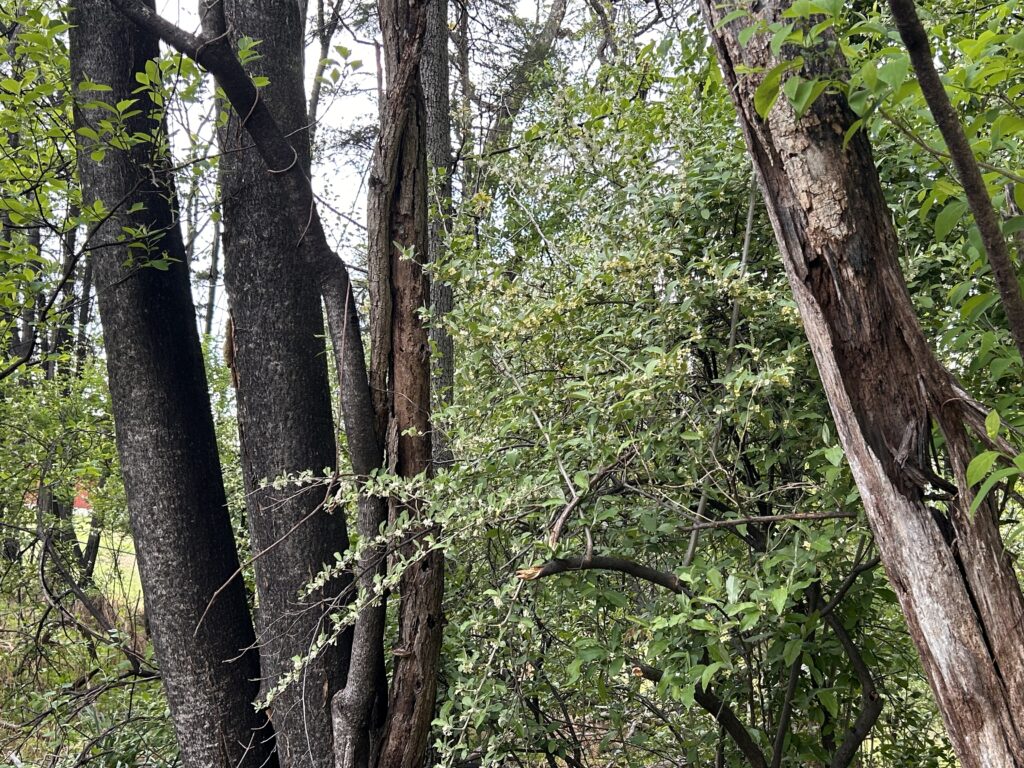
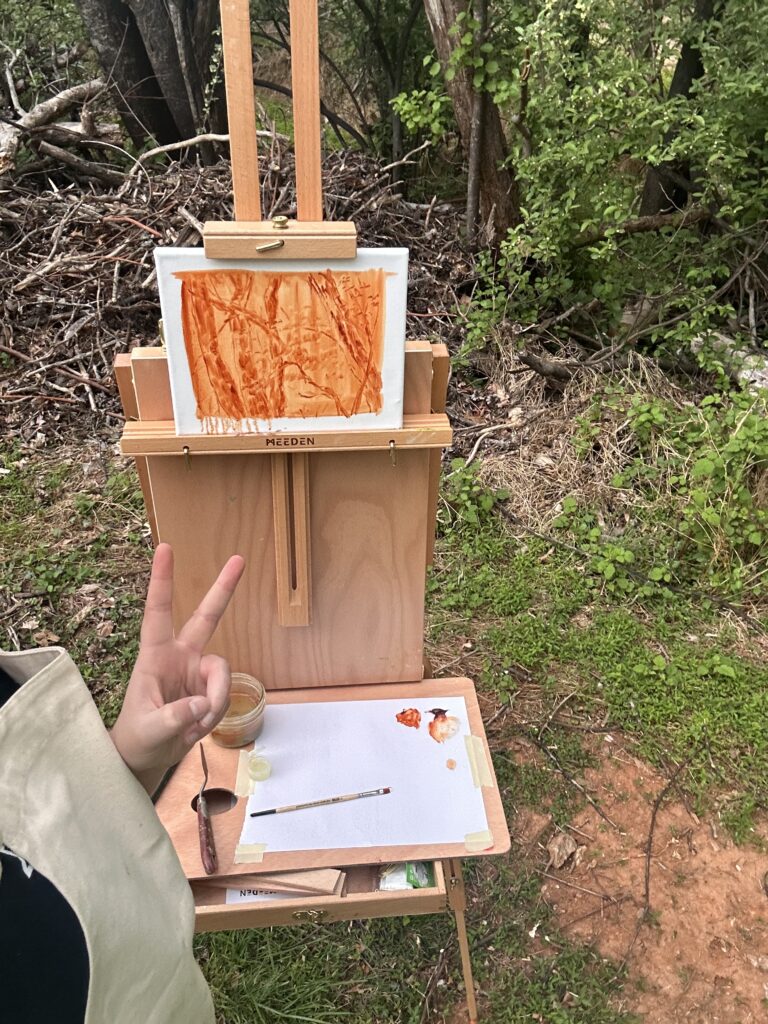
I resolved to try again on Monday, once more in the evening as that was the only time I had. This time, after talking with some classmates, I decided to slow down and focus on laying out all of my values first. I also read in the book that oil painting should go from the thinnest amount of paint (for your base coat) to the thickest (for the highlights, no medium included.) So, in burnt sienna, I made a map of the weathered trees I chose. I liked how they were grouped in a “rule of thirds” type of composition, and how dry and weathered they were compared to the new leaves of the jasmine bush around them. Picking a more interesting subject, as well as actually using enough linseed oil on a smaller and newer canvas, made this attempt much more enjoyable.
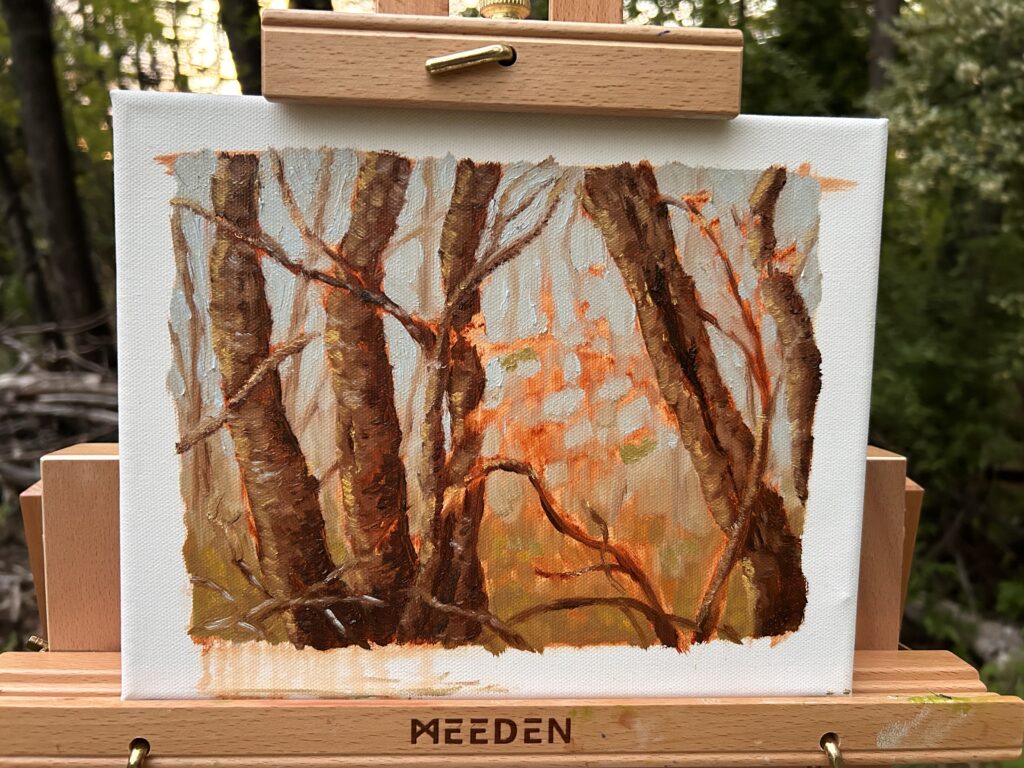
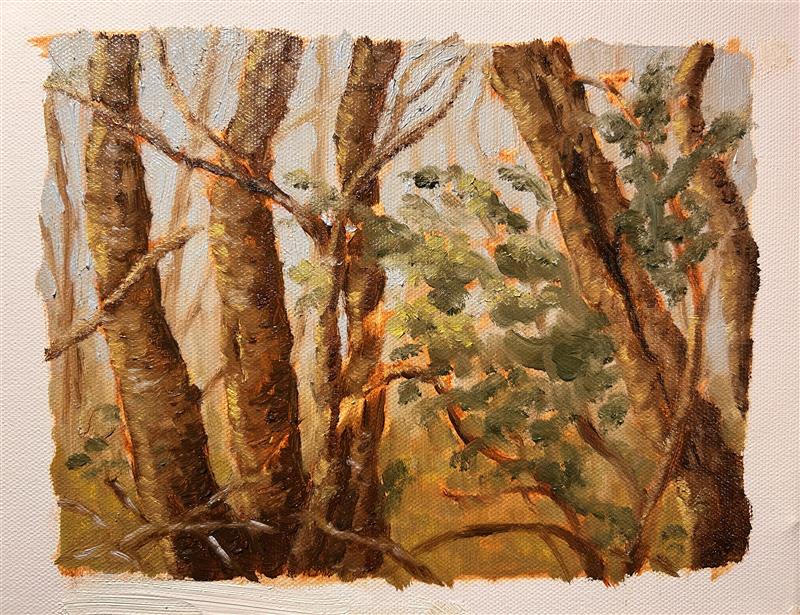
I layered a light blue on the background into a warm green tone for the forest floor, in colors that actually matched the landscape. I then painted in the trees with one dark color, in order to mark where they were and to create more realistic shadows. The most difficult part was all of the criss-crossing branches throughout the scene, but even these were less overwhelming to paint than my original concept. Towards the middle of my session, the sun became extra bright and golden, so I used that color to display much of my lighting. The bark of the tree was much easier to depict on top of the dark base coat as well. The leaves I ran out of time to fully define, since it was getting dark and I (yes, literally) heard animalistic snorting noises coming out of the denser woods behind me. It was probably an annoyed deer, but I wasn’t going to stick around to find out. However, even though it took me three tries, I feel more comfortable with plein air painting and studying nature. Stay tuned for my next attempt and we’ll see if I change my opinion.
Leave a Reply